
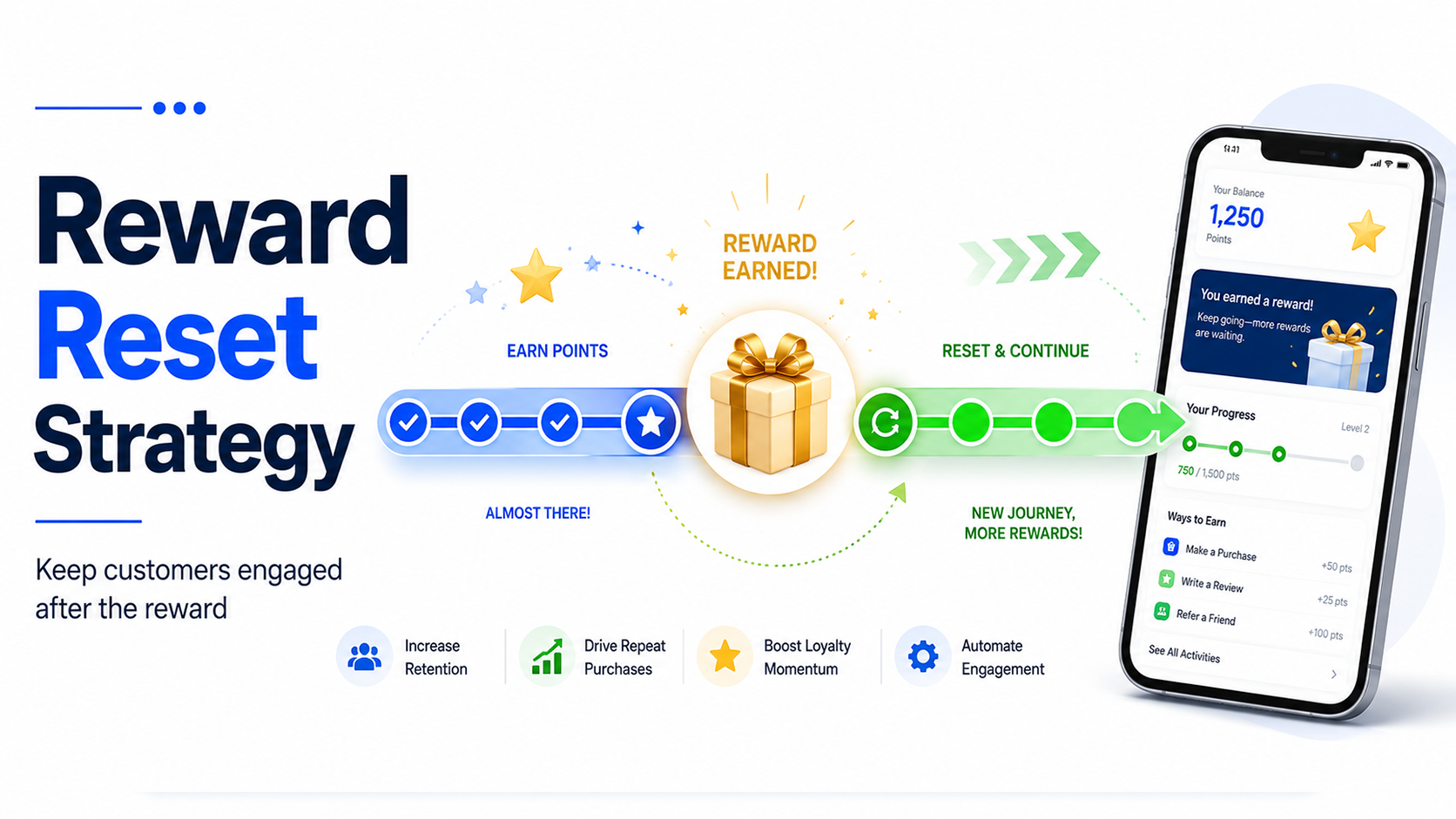
The reward reset strategy is a customer retention approach that focuses on what happens immediately after a customer earns or redeems a reward. Many businesses treat the reward as the finish line. In reality, it may be one of the most important moments to guide the customer toward the next visit.
This matters because customers often become more motivated as they get closer to a reward. Research on the goal-gradient effect in customer reward programs found that people tend to increase effort as they approach a goal. In loyalty programs, that can mean faster visits, more purchases, and stronger engagement as the reward gets closer.
But there is a business problem hidden inside that insight. Once the customer reaches the reward, the progress meter often resets to zero. The customer may feel finished. The excitement drops. The next visit is no longer urgent. That is where the reward reset strategy becomes important.
This article is part of our loyalty strategy series. If you are building a broader customer retention plan, you may also want to review our articles on third visit customer retention strategy, the loyalty timing map, return trigger marketing, and customer preference discovery.
What Is the Reward Reset Strategy?
The reward reset strategy is the practice of moving a customer into the next meaningful loyalty path after a reward is earned or redeemed.
Instead of letting the customer reach a reward and disappear, the business creates a new reason to return. This may include a next reward goal, a small bonus, a tier opportunity, a bounce-back offer, a personalized recommendation, or a timely follow-up message.
The idea is simple: do not let the customer emotionally finish the relationship at the same time they finish the reward.
Why Reward Completion Can Create a Retention Gap
Most loyalty programs are designed around earning behavior. A customer earns points, stamps, cash-back, status, or a reward. That structure can work well because customers like progress.
However, after the reward is reached, the customer may lose the sense of momentum that helped bring them back. The business may have successfully encouraged a purchase, but failed to create the next step.
This creates what we call a reward completion gap.
The customer was motivated before the reward. The customer may even have accelerated behavior near the end. Then, after the reward is earned or used, the customer is left with no clear reason to return soon.
That gap is especially risky for businesses that depend on repeat visits, such as restaurants, car washes, salons, retail stores, medical aesthetics practices, golf courses, hardware stores, automotive service departments, and local service businesses.
The Research Behind the Strategy
The reward reset strategy is connected to several areas of customer behavior research.
Customers Accelerate as They Approach a Reward
The goal-gradient hypothesis suggests that people increase effort as they get closer to a goal. In loyalty programs, this helps explain why a customer who is close to a free item, discount, reward, or tier may become more active.
This is one reason progress visibility matters. A customer who knows they are close to earning something may be more likely to make another visit than a customer who does not know where they stand.
Reward Attainment Can Influence Future Purchase Behavior
Research on recurring goals and successful reward attainment also supports the idea that reward programs should not be viewed as one-time events. When customers successfully reach a reward, the business has an opportunity to shape what happens next.
That next step is where many loyalty programs underperform. They celebrate the reward, but they do not reset the customer into another active path.
Why Most Businesses Miss This Opportunity
Many businesses think of loyalty in terms of setup:
- How many points should customers earn?
- How many visits should trigger a reward?
- What discount should be offered?
- Should the program use stamps, points, tiers, or cash-back?
Those are important questions. But they do not answer the bigger strategic question:
What should happen immediately after the customer earns or redeems the reward?
Without a reward reset plan, the customer may return to a neutral state. The business then has to restart motivation from scratch. A better approach is to use the reward moment as a launch point for the next action.
Examples of Reward Reset Campaigns
A reward reset campaign does not need to be complicated. The best reset campaigns are simple, timely, and connected to the customer’s recent behavior.
1. The Next-Visit Reset
After a customer redeems a reward, the business can give the customer a reason to come back soon.
Example:
Thanks for redeeming your reward. Come back within 14 days and earn double points toward your next one.
This keeps the customer from feeling that the journey is over.
2. The Progress Restart
Instead of showing the customer a zero balance or empty progress bar, give them a starting boost toward the next reward.
Example:
You are already 20% of the way toward your next reward.
This uses the same progress psychology that makes loyalty programs effective in the first place.
3. The Tier Step-Up Reset
If the customer recently earned a reward, invite them toward a higher-value status level.
Example:
You have been active this month. Make two more visits by the end of the month to unlock Gold status benefits.
This works especially well for businesses using VIP levels, customer tiers, or spend-based loyalty programs.
4. The Redemption Follow-Up
After the customer uses a coupon, reward, or certificate, the business can follow up with a thank-you message and a relevant next step.
Example:
We hope you enjoyed your reward. Here is a member-only offer for your next visit.
This turns redemption into a relationship-building moment.
5. The Surprise Bonus Reset
Reward completion can also be followed by an unexpected bonus.
Example:
You earned your reward. As a thank-you, we added 25 bonus points to get you started on the next one.
This can make the customer feel appreciated while keeping them engaged.
How Loyalty Software Helps Support a Reward Reset Strategy
A reward reset strategy becomes easier to manage when a business can recognize the reward moment before customer momentum fades. Loyalty software can help identify moments such as reward earned, reward redeemed, unused reward, reward expiration, customer close to earning, tier progress, coupon use, and no return after redemption.
Those signals can guide more relevant follow-up, such as a thank-you message, progress restart, next-visit reminder, light bonus offer, tier invitation, review request, referral prompt, or early win-back campaign.
For a more practical implementation view, see our strategy implementation page: Reward Reset Strategy Software.
Reward Reset Strategy by Business Type
Different businesses can apply the reward reset strategy in different ways. The goal is not to force every customer into the same offer. The goal is to make the next step feel natural for the business, the reward, and the customer relationship.
Restaurants and Cafes
A restaurant should avoid letting a free item or discount redemption feel like the end of the relationship. A next-visit reset can turn the reward moment into a reason to return soon.
Example:
You used your free lunch reward. Come back this week and earn double points toward your next reward.
Car Washes
A car wash should avoid letting a completed wash reward feel like the end of the wash rhythm. The next message should restart the customer’s routine and give them a reason to begin the next cycle.
Example:
Your free wash reward was redeemed. Start your next wash streak today and get a bonus stamp.
Salons and Spas
A salon or spa can use the reward moment to encourage the next appointment, especially when the customer is already thinking about their service routine.
Example:
Thanks for using your reward. Book your next visit within 30 days and receive bonus points toward your next treatment.
Retail Stores
A retailer can use reward redemption to introduce the customer to a seasonal product, related category, or next shopping occasion.
Example:
You redeemed your member reward. Your next bonus starts now on seasonal items through Sunday.
Automotive Service Departments
An automotive service department can use the reward moment to reinforce the customer’s maintenance rhythm and keep the next service interval visible.
Example:
Thank you for visiting our service department. We added bonus points toward your next scheduled maintenance reward.
Why Timing Matters
The reward reset should happen quickly. If the business waits too long, the customer’s attention may shift elsewhere.
The best moment is usually immediately after the reward is earned or redeemed, or shortly after the visit connected to the reward. That is when the customer is still aware of the loyalty program and the business relationship is active.
This is also why consistency matters. A reward reset process is easy to forget when the business is busy. The stronger strategy is to make the next step part of the program design, not an afterthought.
What Businesses Should Avoid
The reward reset strategy works best when it feels helpful, not aggressive. Businesses should avoid overwhelming customers with too many messages or making every reward feel like a sales push.
Common mistakes include:
- Waiting too long after redemption
- Sending the same reset offer to every customer
- Resetting customers to zero with no visible progress
- Failing to track whether the customer returned after redemption
- Using discounts when a progress-based incentive would work better
The goal is not just to send another promotion. The goal is to keep the customer moving through a meaningful loyalty journey.
A Simple Reward Reset Framework
Businesses can think about the reward reset strategy in four steps:
- Identify the reward moment. Did the customer earn, redeem, approach, ignore, or let a reward expire?
- Choose the next desired action. Should the customer return, redeem again, book, refer, review, buy a related item, or move toward a higher tier?
- Match the lightest useful motivator. Use progress, recognition, a reminder, a small bonus, or a relevant next-step offer before jumping to a larger discount.
- Measure whether the customer moved forward. The goal is not another message. The goal is renewed customer activity.
This framework helps the business avoid one of the most common loyalty mistakes: rewarding past behavior without guiding future behavior.
The Real Purpose of a Reward
A reward should not only thank the customer for what they already did. It should also help shape what they do next.
That is the real value of the reward reset strategy. It turns the end of one loyalty cycle into the beginning of another.
A smarter reward program does more than issue rewards. It helps keep customers active after the reward is earned.
Final Thought
The reward reset strategy gives businesses a better way to think about loyalty. The reward is not the finish line. It is a transition point.
When a customer earns or redeems a reward, the business has the customer’s attention. That is the time to create the next reason to return.
The reward reset strategy works best when it is part of a larger customer retention plan. It connects naturally with third visit marketing, loyalty timing, return trigger marketing, and customer preference discovery.
For a software implementation view, see Reward Reset Strategy Software.
Author note: Christopher Silvestri is Managing Partner and CTO of Preferred Patron Loyalty, a customer loyalty and marketing automation platform used by businesses to manage rewards, customer engagement, retention campaigns, and loyalty technology. His work focuses on helping businesses turn customer data, rewards, and automated messaging into measurable repeat business.
Frequently Asked Questions About the Reward Reset Strategy
What is the reward reset strategy?
The reward reset strategy is a customer retention approach that focuses on what happens after a customer earns or redeems a reward. It guides the customer into the next action, such as another visit, a new reward goal, a tier opportunity, or a follow-up offer.
Why is reward reset important?
Reward reset is important because customers may lose motivation after reaching a reward. If the business does not create a new reason to return, the customer may become less active after redemption.
How can loyalty software help with reward reset campaigns?
Loyalty software can help identify reward moments such as earning, redeeming, nearing, ignoring, or letting a reward expire. For a detailed implementation view, see Reward Reset Strategy Software.
What types of businesses can use the reward reset strategy?
Restaurants, retailers, salons, spas, car washes, golf courses, automotive service departments, hardware stores, medical aesthetics practices, and many other repeat-visit businesses can use the reward reset strategy.
Is the reward reset strategy only for points programs?
No. The reward reset strategy can be used with points, digital stamps, cash-back, coupons, VIP tiers, birthday rewards, referral rewards, visit-based rewards, and other loyalty program formats.