
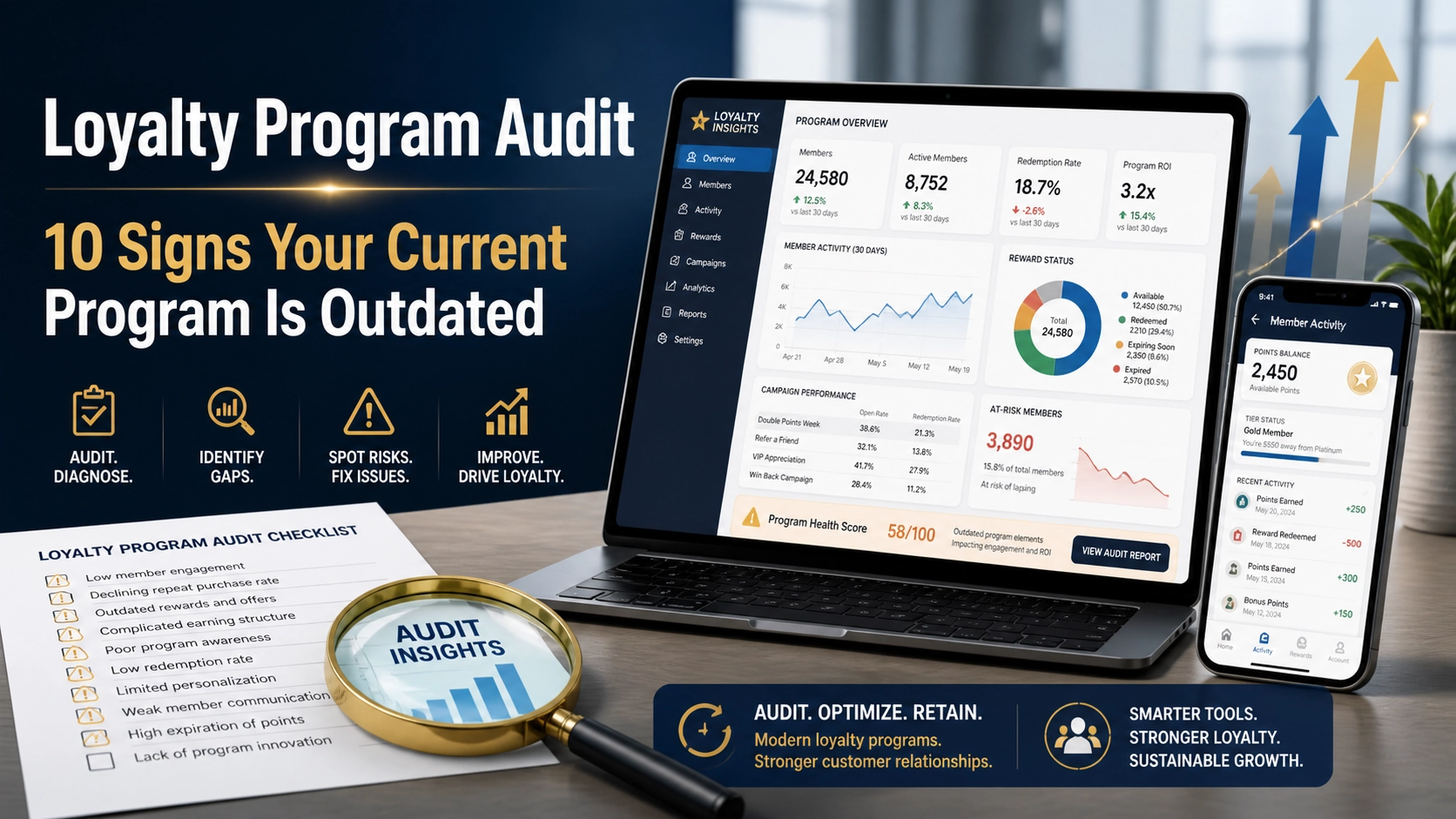
A loyalty program audit can show whether your current loyalty setup is still helping the business grow or whether it has quietly become an outdated loyalty program.
That matters because many businesses judge a program by whether it still runs, not whether it still performs. A loyalty program can still enroll members, issue rewards, or send messages while falling behind customer expectations and modern retention needs.
A real loyalty program audit asks a better question: is this program still helping the business increase repeat visits, improve customer value, and support a stronger customer experience?
Deloitte’s consumer loyalty research has shown that customers increasingly want loyalty programs that feel more personalized, flexible, and digital. That is exactly where many older programs start to struggle.
That is why Preferred Patron is such a strong fit for businesses running this kind of loyalty program audit. Preferred Patron’s platform is built around rewards, automation, messaging, mobile access, and reporting tied to real business outcomes.
In this guide, we’ll look at 10 signs your current program is outdated and what a stronger loyalty platform should do instead.
Why a loyalty program audit matters
A loyalty program audit matters because customer expectations change faster than many loyalty systems do.
What felt modern a few years ago can now feel slow, generic, or hard to use. That is especially true when the program lacks automation, mobile access, useful rewards, or a clear reporting view.
An outdated loyalty program can still cost money and staff time even while delivering weaker retention results. That is why an audit is valuable. It helps the business see what is still working, what is falling behind, and what should improve next.
Loyalty audit sign 1: no practical mobile access
If customers cannot easily check rewards, balances, or offers from a phone, the program is already behind what many members expect.
Mobile access matters because loyalty should feel easy to use between visits, not only at the register. A modern loyalty platform should make it simple for customers to stay connected on the devices they already use every day.
But the key word here is simple. Mobile access does not just mean a mobile app is available. In fact, offering only a mobile app, or worse, requiring one, can create friction for less tech-savvy customers or for people who simply do not want to download and manage another app.
A stronger loyalty program gives customers more than one mobile-friendly way to engage. That can include a mobile app, but it should also include no-download mobile web pages that are presented and open instantly on a customer’s phone when the timing is right. The goal is not just mobile availability. The goal is practical mobile access that feels convenient, flexible, and natural for the widest range of customers.
To read more about how Preferred Patron supports mobile-friendly loyalty access, see the mobile loyalty page.
Loyalty audit sign 2: too much discounting
If the program depends on constant price cuts to get attention, the business may be weakening margin more than it is building loyalty.
A strong loyalty program should create repeat behavior through timing, relevance, rewards, convenience, and recognition. Discounts can help sometimes, but they should not be the whole strategy.
To read more about how Preferred Patron supports controlled discounting, see Rewards vs Discounts.
Loyalty audit sign 3: no automation
If the team has to manually send every reminder, birthday message, or win-back offer, the program is likely wasting time and missing key customer moments.
Automation is one of the clearest signs of a modern retention setup because it helps the business act at the right time without relying only on staff memory.
Loyalty audit sign 4: poor sign-up experience
If enrollment feels slow, awkward, or hard for staff to explain, the program is probably losing members before it even starts working.
A loyalty program audit should always include sign-up friction because weak enrollment often hides larger problems in program design.
Outdated loyalty program sign 5: little or no segmentation
If every member gets the same offer at the same time, the program is likely missing one of the biggest gains in modern loyalty: relevance.
McKinsey’s personalization research has shown how much customers now expect more relevant interactions. A loyalty program audit should ask whether the platform can segment members by behavior, value, or timing instead of blasting the same message to everyone.
Outdated loyalty program sign 6: no clear reporting
If the program cannot tie activity back to visits, spend, redemptions, and retention, the business has no real way to know what is working.
That makes it hard to improve the program because the team is left guessing instead of managing from actual results.
Outdated loyalty program sign 7: rewards feel weak
If members do not care about the rewards or rarely redeem them, the value exchange may be too weak, too confusing, or too far away.
A good loyalty program audit should look at whether customers understand the rewards, whether they want them, and whether they feel achievable.
Outdated loyalty program sign 8: the program cannot grow with the business
If the program works only for one store, one simple campaign, or one narrow format, it may not be able to support the business as it expands.
An outdated loyalty program often becomes more fragile as the business grows, especially when new locations, new channels, or new campaign types are added.
Loyalty audit sign 9: staff do not use it well
If the team avoids mentioning the program or finds it too clumsy to use, the customer experience usually suffers too.
A loyalty program should fit the workflow, not fight it. Staff resistance is often a strong sign that the setup is outdated or overcomplicated.
Loyalty audit sign 10: members do not care
If members join but do not engage, redeem, or return more often, the program may still exist but no longer matter.
That is one of the clearest outcomes a loyalty program audit can reveal. Activity without loyalty is not the same as real retention.
Why Preferred Patron is a strong fit
Preferred Patron is a strong fit because it addresses the exact weaknesses that usually show up in a loyalty program audit.
Preferred Patron combines points, rewards, tiers, gift cards, automation, omni-channel messaging, mobile access, and reporting in one retention platform. That gives businesses a cleaner path away from outdated loyalty tools and toward something that fits current customer expectations better.
To read more about solution-specific information on this topic, see the platform overview, the feature overview, the mobile app page, and the pricing page.
Final thoughts
A loyalty program audit is not about whether the program still runs. It is about whether the program still helps the business grow in the way it should.
If the program feels weak, outdated, hard to use, or too dependent on discounting, it may be time for a better platform and a better retention design.
Preferred Patron helps businesses move beyond outdated loyalty patterns and into a more modern, measurable loyalty system.
FAQ
What is a loyalty program audit?
A loyalty program audit is a review of whether the current program still fits customer expectations, business goals, and modern retention needs.
How do I know if my loyalty program is outdated?
Signs include weak rewards, poor signup flow, no automation, no mobile access, little segmentation, and weak reporting.
Why is mobile access important in a loyalty program audit?
Because customers increasingly expect to see their rewards, balances, and offers from a phone without friction.
How does Preferred Patron help?
Preferred Patron helps businesses replace outdated loyalty patterns with a modern platform built around rewards, messaging, mobile access, and measurable retention.