
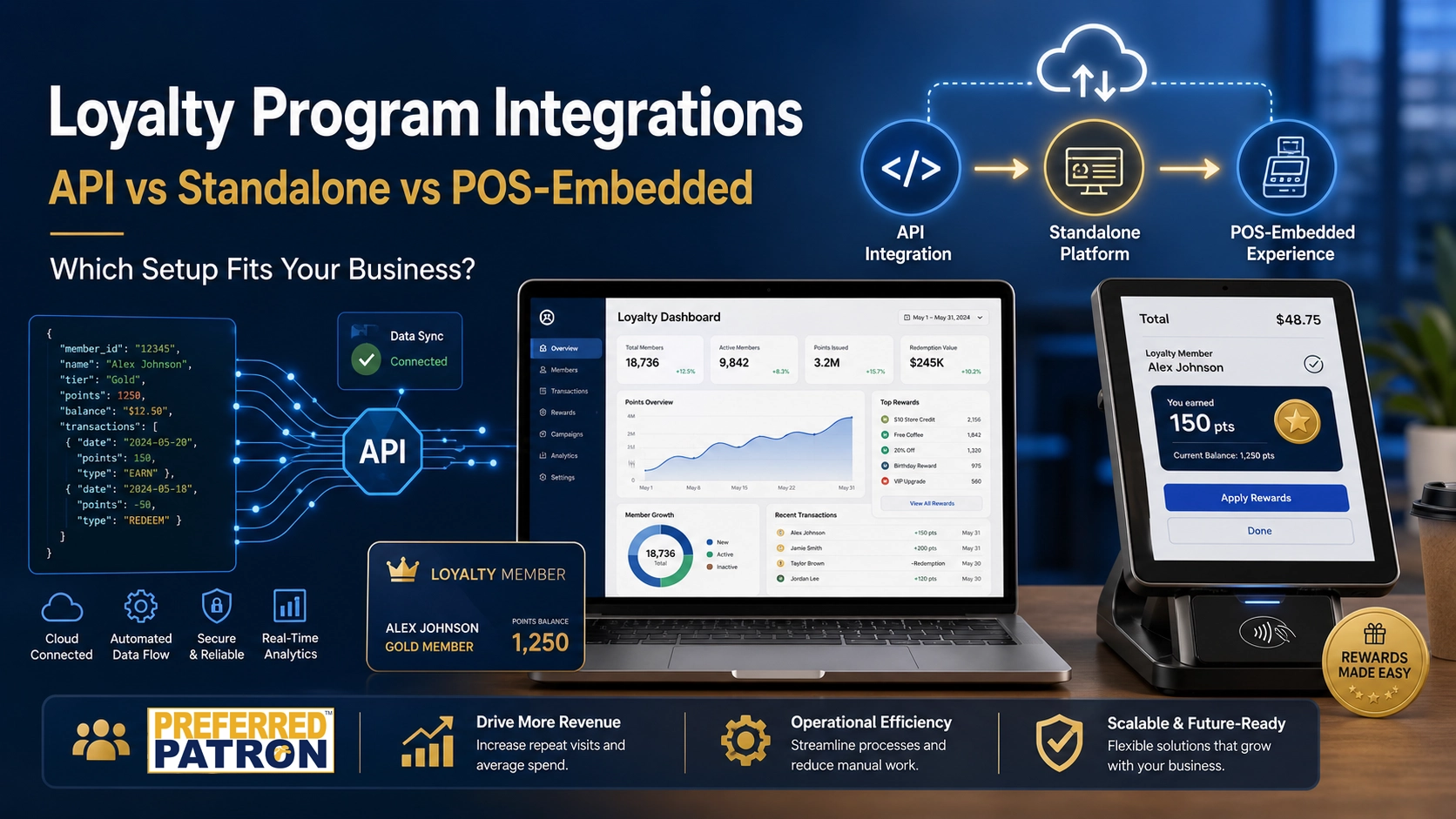
Loyalty program integrations matter because the wrong setup can make a good loyalty idea feel harder than it should.
Some businesses need a standalone loyalty platform they can launch quickly. Others need API loyalty integrations that connect rewards, redemptions, and customer data to ecommerce, mobile apps, or custom workflows. And some want loyalty tied directly into the point-of-sale experience.
The best choice depends on how your business operates now, how much flexibility you need, and how much technical involvement your team can support. The goal is not to choose the most complex option. The goal is to choose the setup that fits your workflow and helps you grow repeat business without unnecessary friction.
IBM defines API integration as the use of APIs to connect software applications and systems for data and service exchange. That is a useful framing here because loyalty software should fit into the broader business system, not sit in isolation if your workflow depends on connected data.
That is why Preferred Patron is a strong fit. Preferred Patron supports standalone loyalty launches, direct POS integrations, and a REST API for teams that want to connect loyalty marketing, rewards, redemptions, and gift card processing into ecommerce, websites, mobile apps, or point-of-sale workflows.
In this guide, we’ll compare API vs standalone vs POS-embedded loyalty setups, explain when each option works best, and show how Preferred Patron helps businesses choose the right integration path.
What loyalty program integrations mean
Loyalty program integrations are the ways a loyalty platform connects to the systems your business already uses.
That may include a point-of-sale system, ecommerce checkout, mobile app, website, or other internal workflows. Good integrations help loyalty data stay accurate and useful, especially when points, redemptions, and customer activity need to match what actually happened.
When a standalone loyalty platform makes sense
A standalone loyalty platform makes sense when the business wants speed, lower complexity, and a practical launch path.
This is often the best fit for small businesses or teams that want to start with points, rewards, gift cards, and automated messaging without waiting on development work.
Preferred Patron is strong here because it supports fast launch paths that do not require replacing the POS just to get loyalty live. To read more about that kind of setup, see the Preferred Patron platform overview and the loyalty FAQs.
When API loyalty integrations make sense
API loyalty integrations make sense when the business needs flexibility, custom workflows, or deeper connection to existing software.
If you want loyalty tied into ecommerce, a custom website flow, a mobile application, or a POS workflow where your team has source-code access, an API approach can be the best fit.
Preferred Patron’s REST API is built for this kind of work. It supports loyalty marketing, rewards, redemptions, and gift card processing through a platform-independent integration layer built around JSON and standard HTTP methods. To read more, see the integration API page.
When POS-embedded loyalty integration makes sense
POS-embedded loyalty makes sense when the business wants the loyalty action to happen directly in the checkout flow.
This can work well when speed at the register matters, when earn-and-redeem behavior needs to feel seamless, or when the team wants fewer disconnected steps between purchase and rewards.
Preferred Patron supports direct POS integrations as well as other loyalty program integrations, which helps businesses decide whether the best answer is fully embedded or connected in a different way through the broader platform.
How to choose the right loyalty program integration
The best way to choose a loyalty program integration is to start with your real workflow, not the technology label.
Ask whether the team needs fast launch, deeper customization, stronger ecommerce connection, or more direct checkout automation. Then match the setup to those needs.
Businesses that want fast launch often do best with a standalone platform first. Businesses with developers and custom environments often benefit from an API. Businesses that prioritize in-lane simplicity may prefer tighter POS connectivity.
What businesses get wrong
The biggest mistake is assuming every business needs the most technical option.
Another mistake is choosing a simple setup when the workflow really requires connected customer data and real-time transaction logic. Good loyalty program integrations are not about complexity for its own sake. They are about fit.
Businesses also get into trouble when they judge loyalty software only by launch speed and not by how well it will work after launch.
Why Preferred Patron is a strong fit
Preferred Patron is a strong fit because it supports more than one integration path instead of forcing every business into the same model.
Preferred Patron can work as a standalone loyalty platform, connect through direct POS partnerships, or extend through a REST API into ecommerce, websites, mobile apps, and point-of-sale workflows. That flexibility helps businesses choose the setup that matches their current needs and still leaves room to grow.
To read more about solution-specific information on this topic, see the integration page, the feature overview, the platform overview, and the launch without replacing your POS guide.
Final thoughts
Loyalty program integrations should make retention easier, not harder.
The best setup is the one that fits the business today and still supports where the business wants to go next. For some teams that means standalone. For others it means API. For others it means POS-connected loyalty.
Preferred Patron gives businesses a practical way to choose the right path without giving up rewards, messaging, reporting, or long-term flexibility.
FAQ
What are loyalty program integrations?
Loyalty program integrations are the ways a loyalty platform connects with systems like POS, ecommerce, websites, mobile apps, and internal workflows.
When should a business use a loyalty API?
A loyalty API makes sense when the business needs custom workflows, deeper system connection, or loyalty inside an existing ecommerce, web, or app experience.
Is a standalone loyalty platform enough for many businesses?
Yes. Many businesses do well with a standalone platform when they want faster launch and less technical complexity.
How does Preferred Patron help?
Preferred Patron supports standalone launches, direct POS integrations, and a REST API so businesses can choose the setup that fits their workflow best.