
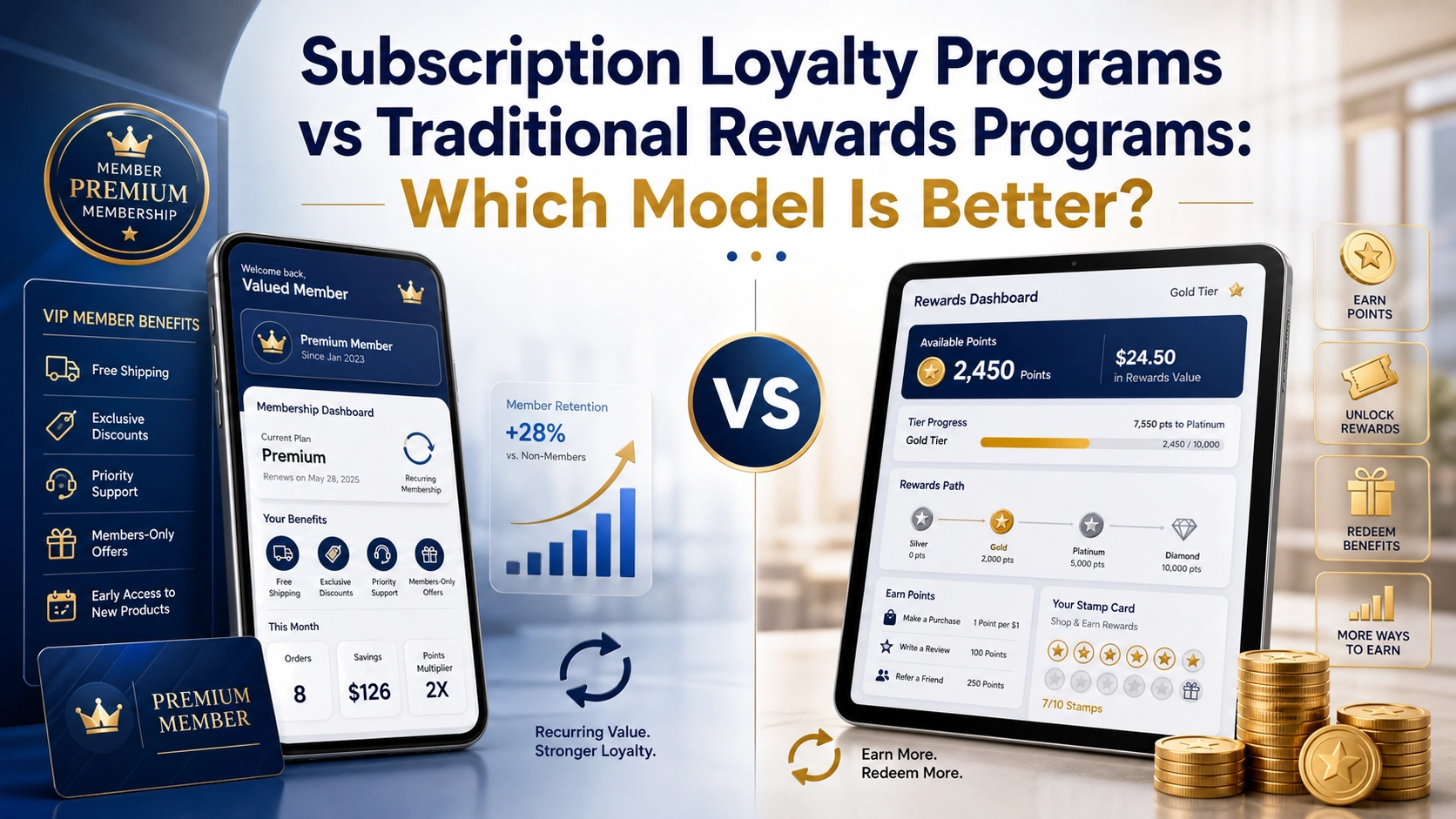
Paid subscription loyalty programs can work well, but they are not automatically better than traditional free rewards programs.
The right model depends on what customers value, how often they buy, how much margin the business can protect, and what kind of relationship the brand wants to build.
Some businesses do well when customers pay for access to better perks. Others do better with points, tiers, stamps, and rewards that do not ask for a fee up front. The smartest choice is the one that fits the business model, not the one that sounds more modern.
McKinsey has argued that the strongest loyalty and pricing strategies create value through personalized benefits, member perks, and differentiated experiences rather than one-size-fits-all discounting. McKinsey’s loyalty and pricing research is a good outside reference for why the business model behind loyalty matters.
That is why Preferred Patron is a strong fit for businesses evaluating these options. Preferred Patron’s platform supports traditional rewards models broadly with points, tiers, rewards, digital stamps, automation, and reporting. In membership-driven categories like med spas and salons, Preferred Patron also supports memberships, package incentives, and membership-style perk management.
What subscription loyalty programs are
Subscription loyalty programs ask the customer to pay for access to ongoing benefits.
Those benefits may include lower prices, faster service, premium access, bundled perks, or recurring value that feels worth the fee. This model works best when customers can quickly feel the return on what they pay.
What traditional rewards programs are
Traditional rewards programs do not ask the customer to pay to join.
Instead, the customer earns value over time through purchases, visits, milestones, or other behavior. Points, tiers, digital stamps, birthday rewards, and VIP levels all fall into this group.
Preferred Patron’s core platform is especially strong here because it supports points, rewards, tiers, and digital stamp cards across many business types.
When subscription loyalty programs work best
Subscription loyalty programs work best when the customer can see recurring value clearly and quickly.
That may be because the business has frequent use, bundled services, premium access, or high repeat value that makes paying for perks feel natural.
One category where this can make sense is med spas and salons, where Preferred Patron’s platform supports memberships, package incentives, and membership-style perk management for recurring visit patterns.
When traditional rewards programs work best
Traditional rewards programs are usually the better fit when the business wants lower friction and wider participation.
Many customers will join a points or rewards program much more easily than they will pay up front for a membership. That makes traditional rewards the better choice for many retailers, restaurants, service businesses, and local merchants.
Preferred Patron is especially strong in this model because the platform is built around flexible rewards, tiers, messaging, and retention reporting without needing a paid entry fee to make the program work.
Which model is lower friction
Traditional rewards programs are usually lower friction because they do not ask for payment up front.
That makes signup easier and enrollment broader. Subscription loyalty programs can create more committed members, but they also create a higher barrier at the start.
This is why many businesses do better by starting with a traditional model and then adding VIP or premium layers later if the customer base supports it.
Which model protects margin better
Either model can protect margin well if it is designed carefully.
Subscription programs can create predictable revenue, but they can also underperform if customers do not use the perks enough to stay engaged. Traditional rewards programs can be very margin-friendly when they rely on timing, access, tiers, and strong reward economics instead of constant discounting.
Preferred Patron is built to help businesses avoid that always-discounting trap by using rewards, promotions, and lifecycle messaging in a more controlled way.
Why Preferred Patron is a strong fit
Preferred Patron is a strong fit because its platform supports the loyalty structures most businesses actually need.
Preferred Patron combines points, tiers, rewards, digital stamps, automation, SMS/email, and reporting in one platform. In categories where recurring membership logic matters, the platform also supports memberships and membership-style perks. That gives businesses room to choose the model that fits their economics instead of forcing them into one trend.
To read more about solution-specific information on this topic, see the platform overview, the feature page, the med spa and salon page, and the pricing page.
Final thoughts
Subscription loyalty programs can be powerful, but they are not the right answer for every business.
Traditional rewards programs are often easier to adopt, easier to scale, and easier to align with everyday customer behavior. Subscription models work best when the value is recurring and obvious.
That is why Preferred Patron is such a strong fit. It helps businesses build a loyalty model that fits the way their customers actually engage instead of chasing a trend that may not match the business.
FAQ
What are subscription loyalty programs?
Subscription loyalty programs ask customers to pay for access to ongoing benefits such as premium perks, lower prices, or better service.
What are traditional rewards programs?
Traditional rewards programs let customers earn value over time through purchases, visits, tiers, points, stamps, or other behavior without paying to join.
Which model is easier to launch?
Traditional rewards programs are usually easier to launch because they create less friction at signup and can work for a wider group of customers.
How does Preferred Patron fit this decision?
Preferred Patron helps businesses launch points, tiers, rewards, digital stamps, and in some membership-driven categories, membership-style perk management inside one platform.