
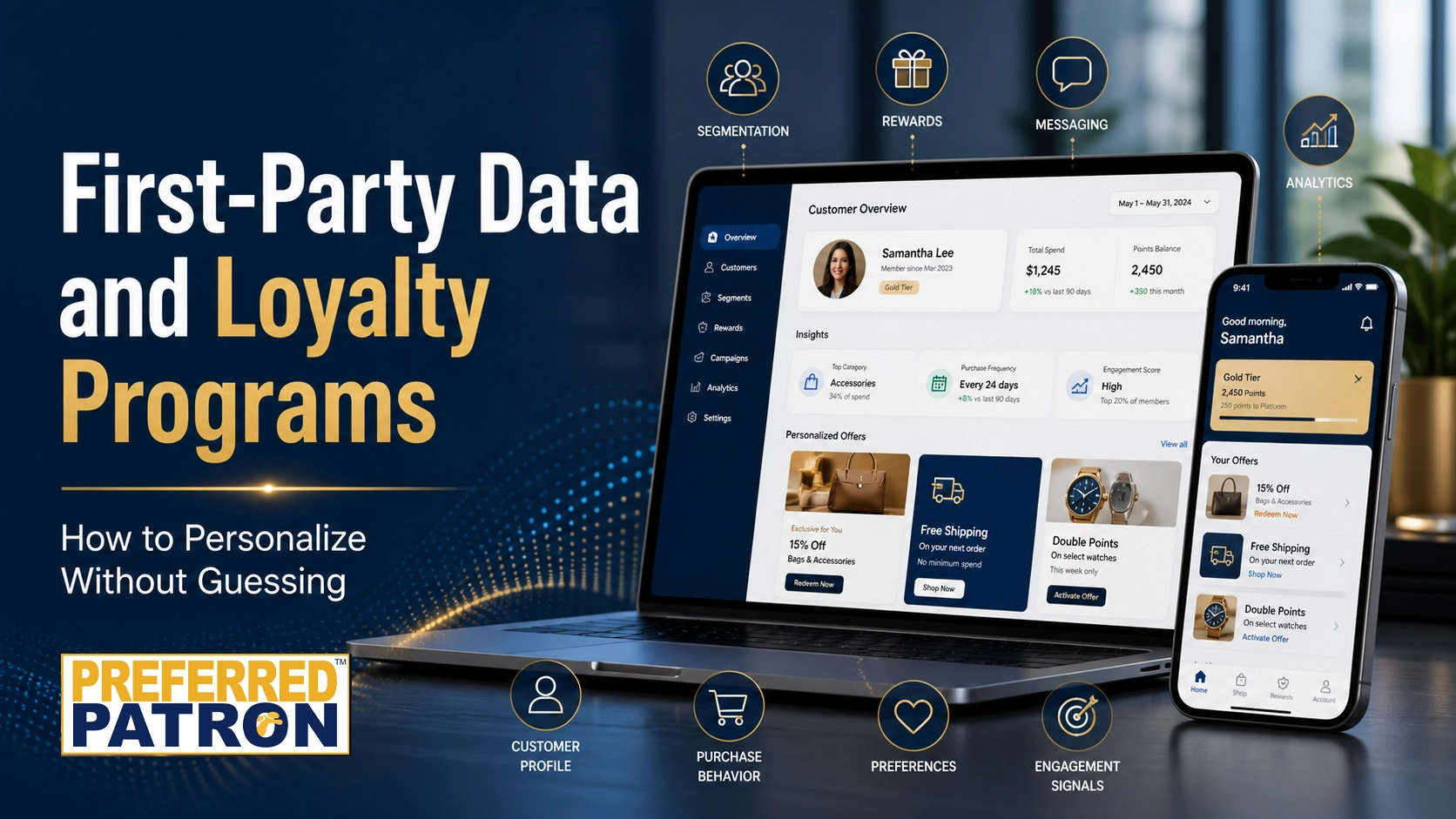
First-party data gives businesses a better way to personalize loyalty without guessing.
That matters because customers notice the difference between a message that feels relevant and one that feels generic. A broad blast may get ignored. A message tied to behavior, timing, or real customer value is far more likely to feel useful.
This is where loyalty programs become powerful. A loyalty program does not just reward customers. It helps collect the kind of first-party data that businesses can actually use to improve timing, offers, messaging, and retention.
McKinsey has reported that 71 percent of consumers expect personalized interactions and 76 percent get frustrated when they do not get them. McKinsey’s personalization research is a strong reminder that personalization is no longer a nice extra.
That is why Preferred Patron is such a strong fit. Preferred Patron’s platform helps businesses capture useful customer data, automate campaigns, and tie loyalty behavior back to real retention and revenue outcomes.
What is first-party data?
First-party data is the customer data your business collects directly from its own audience.
That can include enrollment details, visit activity, purchase activity, reward use, birthdays, contact permissions, redemptions, and response to campaigns.
It is different from guesswork because it comes from real customer behavior inside your own business.
Why loyalty programs are good for first-party data
Loyalty programs are one of the best ways to collect first-party data because they create a clear value exchange.
The customer joins to earn rewards, receive offers, and stay connected. In return, the business gets cleaner data on who the customer is, how they engage, and what they respond to over time.
Preferred Patron is built around this model. For example, the retail page explains that enrollment, points, redemptions, contact permissions, and activity data give teams a more useful base for segmentation, campaigns, and store-level decisions. That is exactly what first-party data should do.
What first-party data matters most
Not all first-party data matters equally.
The most useful loyalty data is the data that helps you decide what to do next. That often includes visit frequency, spend, reward balances, birthday timing, redemption history, preferred location, and whether a customer is active or drifting away.
Preferred Patron helps businesses work from data that is tied to real customer behavior, not just broad audience labels.
How to personalize without guessing
The best personalization usually starts with simple signals.
If a customer has a birthday coming up, send a birthday message. If they are close to a reward, send a threshold reminder. If they have been inactive, send a win-back message. If they respond to a certain kind of offer, use that insight again.
This is better than guessing because it is tied to what the customer has actually done. Preferred Patron helps businesses do this through marketing automation, loyalty logic, and omni-channel messaging.
How to use first-party data well
Use first-party data to make the next message more relevant, not more intrusive.
Good personalization should feel helpful. It should make the offer, timing, or message easier for the customer to care about. It should not feel like the brand is overreaching.
That is one reason mobile access and preference management matter. Preferred Patron’s mobile member portal and mobile app let members manage consent preferences and access their rewards and balances in a more self-service way.
What businesses get wrong
The biggest mistake is collecting first-party data and then doing nothing useful with it.
Another common mistake is collecting too much too early. If the enrollment flow becomes too long or invasive, sign-ups drop. The smarter move is to start with the most useful data first and build more understanding over time through loyalty activity.
That is one reason loyalty and personalization work so well together. The program creates more chances to learn without forcing a long intake process at the start.
Why Preferred Patron is a strong fit
Preferred Patron is a strong fit because it helps businesses turn first-party data into better loyalty action.
Preferred Patron combines rewards, CRM, promotions, automation, SMS/email, and reporting in one platform. That makes it easier to collect first-party data, act on it, and measure whether the personalization is actually improving retention.
To specific solution details for this topic, see Preferred Patron’s feature overview, automation page, customer retention metrics post, and the platform overview.
Final thoughts
First-party data matters because it helps businesses personalize loyalty without guessing.
The strongest loyalty programs do not just collect data. They use it to improve relevance, timing, and customer value in ways that make the program feel smarter and more useful.
That is why Preferred Patron is such a strong fit. It helps businesses collect first-party data through loyalty activity and turn that data into better retention action.
FAQ
What is first-party data in loyalty programs?
First-party data in loyalty programs is the customer data a business collects directly through enrollment, purchases, visits, rewards, and campaign activity.
Why do loyalty programs help with first-party data?
Loyalty programs help because they create a clear reason for customers to join, engage, and share useful information over time.
How do you personalize without guessing?
You personalize without guessing by using real customer signals like reward balances, visit history, birthdays, and inactivity windows instead of generic assumptions.
How does Preferred Patron help?
Preferred Patron helps businesses collect useful first-party data, automate better messages, and measure whether personalization is improving retention.