
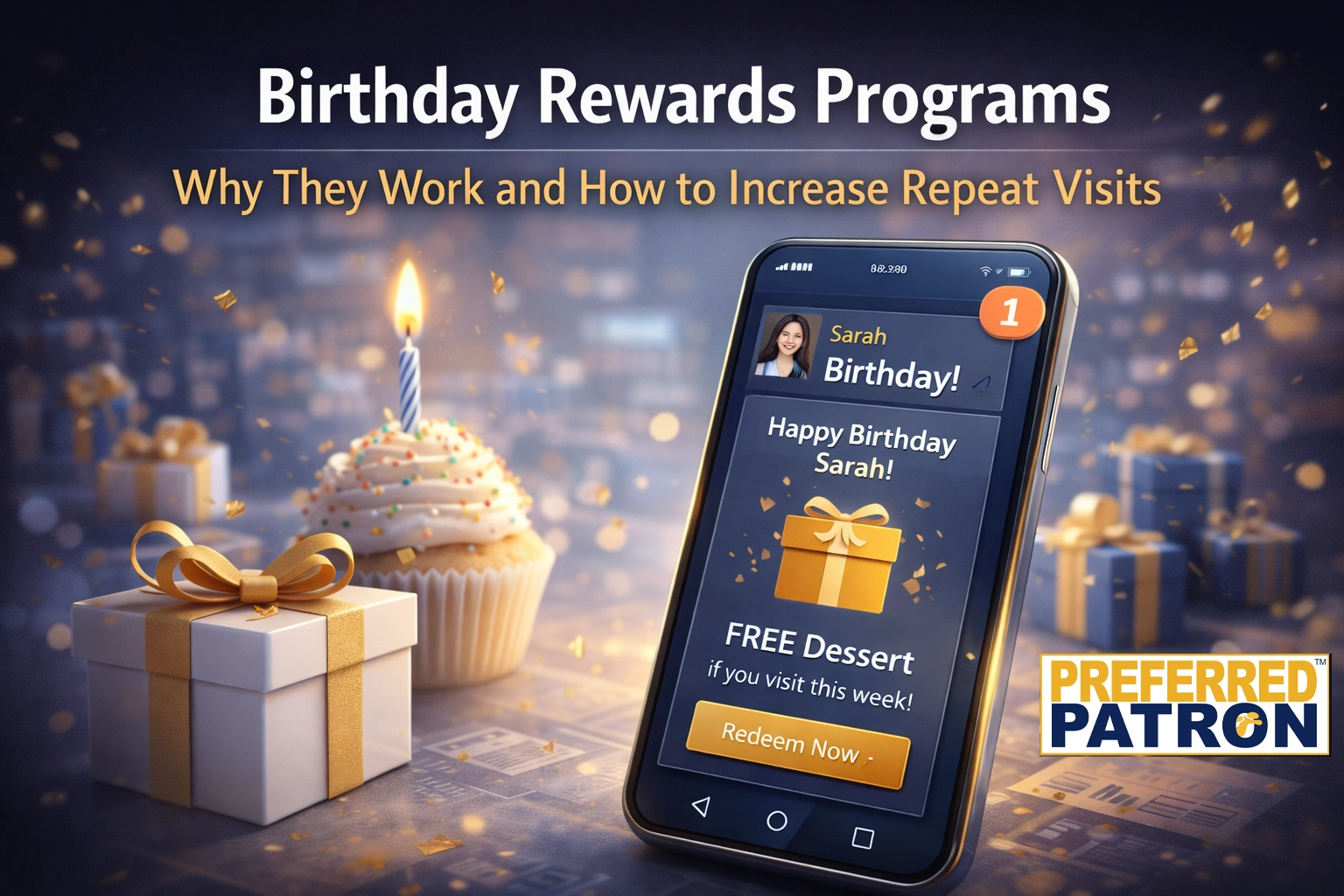
Birthday programs work because they combine three powerful customer motivators at once: timing, personalization, and an easy reason to return.
That combination is hard to beat. A birthday is one of the few moments every customer instantly recognizes as personally relevant. It gives the business permission to reach out, gives the customer a natural reason to pay attention, and turns a routine promotion into something that feels individualized rather than generic.
That matters because most promotions have to fight for attention. Birthday do not start from zero. They arrive at a moment when the customer already expects acknowledgment, is often more open to treating themselves, and is more likely to notice a message tied directly to them. That is one reason birthday campaigns remain such a durable loyalty tactic.
The research supports the idea that birthday incentives can influence real purchase behavior. A 2024 study analyzing birthday rewards in a large retail loyalty program found measurable effects on purchase behavior, reinforcing that birthday promotions are not just a feel-good gesture. This study on birthday rewards in a loyalty program is one of the strongest direct references for the topic.
That is also why Preferred Patron Loyalty is such a strong fit for birthday programs. Preferred Patron combines loyalty rewards, automated email and SMS, mobile member access, targeted promotions, and reporting in one platform, which makes it possible to deploy birthday outreach as part of a real retention strategy rather than as a one-off coupon.
In this guide, we’ll break down why birthday programs work, which psychological triggers matter most, what types of offers perform best, how often and when to contact customers, what businesses lose when they do not use birthday campaigns well, and why Preferred Patron is a smart platform for turning birthdays into repeat visits.
What is a birthday program?
A birthday program is a loyalty tactic that gives customers a birthday-related offer, reward, message, or incentive designed to increase engagement and encourage a return visit.
That reward can take many forms. Some businesses offer bonus points. Some offer a free item, service add-on, or digital reward. Others use a birthday campaign to unlock a limited-time discount, a member-only perk, or a reminder that the customer already has loyalty value waiting.
The most effective birthday programs do not treat the birthday offer as an isolated promotion. They use it as part of a larger customer retention strategy that includes enrollment, segmentation, automated outreach, reward visibility, and follow-up messaging.
Why birthday programs work
Birthday programs work because they feel personal without requiring the business to invent a complicated reason for outreach.
Customers already understand why they are receiving the message. That reduces skepticism and increases attention. A birthday reward does not feel like random advertising. It feels like recognition.
They also work because birthdays create natural timing. A customer may ignore a generic promotion on an ordinary day, but a birthday offer often feels more relevant, more justifiable, and easier to act on. The message arrives with built-in context, which lowers mental friction.
Businesses also benefit because birthday campaigns are predictable and automatable. Instead of guessing when to reach out, the business already has a meaningful lifecycle trigger. Preferred Patron makes that especially practical through marketing automation, automated email and SMS, and event-based messaging tied to customer milestones.
The psychology behind birthday programs
1. Personal recognition creates attention
Birthday programs work because they feel unmistakably personal.
Personalization research consistently shows that customers respond better when communication feels relevant to them rather than mass distributed. A birthday message is one of the simplest and most credible forms of personalized outreach because it is tied to a real customer milestone rather than an inferred behavior alone.
2. The timing lowers decision friction
People are often more willing to indulge, celebrate, or justify a return visit during a birthday window.
That means the business does not need to manufacture as much motivation as it would with a generic offer. The customer is already more open to saying yes, which makes the birthday reward more efficient than an ordinary promotion sent at a random time.
3. Birthday programs reinforce the relationship
Birthday campaigns also signal that the business remembers the customer as an individual.
That matters psychologically because loyalty is not only about economic value. It is also about feeling seen, recognized, and appreciated. A timely birthday reward can strengthen the customer’s sense that the business values the relationship, not just the transaction.
4. A deadline creates action
The strongest birthday programs usually include a redemption window.
That gives the customer a reason to act before the moment passes. Without a deadline, the offer can become background noise. With a credible time limit, the birthday message becomes more actionable and more likely to convert into a visit.
What kinds of birthday programs work best?
Bonus points and reward balance boosters
Bonus points work well because they feel like a gift while still pulling the customer deeper into the loyalty program.
This is especially useful when the goal is not just one visit, but stronger future participation. Preferred Patron supports flexible points, rewards, and promotions through its loyalty platform features, which makes birthday point boosters easy to tie into broader retention goals.
Free items or service add-ons
These offers work best when the business wants a simple, emotionally clear reward.
A free item can be highly effective because it feels celebratory and easy to understand. It also gives the customer a reason to redeem now instead of saving the message for later and forgetting it.
Limited-time birthday discounts
Discounts can work, but they work best when they are framed as a birthday-specific invitation rather than a broad price cut.
The key is to avoid training customers to wait for discounts. The offer should feel tied to the occasion, not like an ordinary markdown.
Tier or VIP-style birthday perks
If the business uses tiers, birthdays are a strong moment to reinforce status.
That could mean a higher-value perk for top members, an exclusive birthday window, or extra benefits tied to membership level. Preferred Patron supports tiers and targeted messaging, which makes birthday rewards especially effective in tiered programs.
Timing, channel, and frequency for birthday programs
When should the birthday message go out?
Most businesses do better when they do not wait until the exact birthday day alone.
A strong approach often starts a little before the birthday so the customer has time to notice the offer and plan to use it. A reminder closer to the birthday or before expiration can then help convert attention into action.
How many birthday messages should you send?
Usually, one message is not enough and constant reminders are too much.
The better approach is a short sequence: an initial birthday offer, a reminder during the redemption window, and possibly a final reminder before expiration. The goal is to stay visible without making the campaign feel desperate.
Should birthday programs use email or SMS?
Email works well when the message needs a little more visual presentation or room to explain the reward. SMS works well when immediacy matters and the call to action is simple.
Many businesses get the best results by coordinating both. Preferred Patron is especially useful here because it supports branded email, built-in SMS, and automated messaging journeys from one system. Its public pages specifically call out built-in SMS/email and automated birthday journeys as part of its broader loyalty and automation stack. Preferred Patron’s small business loyalty page is a good example of that birthday-ready setup in action.
What businesses lose when they do not use birthday programs well
Businesses that ignore birthday programs usually miss one of the easiest high-relevance touchpoints they have.
Without a structured birthday campaign, the business loses a natural reason to re-engage customers, reinforce the relationship, and bring people back during a moment when they are already more open to acting. That means fewer lifecycle touchpoints, fewer return visits, and more dependence on generic promotions.
They also lose a clean opportunity to collect and use first-party customer data in a way customers understand and usually accept. A birthday field is one of the simplest pieces of personalization data to put to work, and businesses that fail to use it often end up relying more heavily on blunt offers that feel less relevant.
How to build a birthday program that actually works
Step 1: Capture birthdays during enrollment
The first step is simple but essential. If you do not collect the birthday, you cannot automate the campaign.
Preferred Patron supports enrollment forms, customer records, and automated journeys, which makes birthday capture and follow-up much easier to operationalize through the platform.
Step 2: Choose a reward that matches the business model
Some brands should use bonus points. Some should use a free item. Some should use a time-limited digital reward or VIP-style perk. The right birthday reward is the one that feels meaningful to the customer while still making sense for margin and repeat behavior.
Step 3: Build a short automated sequence
A strong birthday program usually includes more than one message.
Set an initial birthday message, then a reminder during the window, and possibly a last-chance reminder before expiration. Preferred Patron’s automation capabilities are especially valuable here because they reduce manual effort while keeping the cadence consistent.
Step 4: Make redemption easy
The offer should be easy to understand, easy to find, and easy to use.
Preferred Patron’s mobile member portal helps by giving customers a place to see offers, rewards, balances, and message history without forcing the business to build a custom app. That makes birthday programs more visible between visits and easier to redeem in the moment.
Step 5: Measure repeat-visit impact
The final question is not whether the message opened. It is whether the birthday program actually brought customers back.
Preferred Patron’s reporting and conversion-oriented loyalty setup make it easier to connect birthday outreach to real return behavior instead of stopping at vanity metrics.
Why Preferred Patron is a strong fit for birthday programs
Preferred Patron is a strong fit for birthday programs because it brings together the exact tools that make birthday campaigns effective.
It supports birthday rewards, automated email and SMS, mobile reward visibility, points, tiers, promotions, and broader retention reporting in one platform. That means businesses can capture birthdays, trigger the right message automatically, give customers a meaningful reward, and measure whether the campaign produced a real return visit instead of just another open or click.
It is also a good fit because it keeps birthday programs connected to the wider loyalty strategy. A birthday campaign becomes much more valuable when it is not just a one-off gift, but part of a system that includes points, tiers, rewards, win-backs, segmentation, and ongoing customer communication.
If you want to explore how that works in practice, start with the Preferred Patron feature overview, explore marketing automation, review the mobile member portal, compare plans on the pricing page, and use the FAQ page for rollout questions.
Final thoughts
Birthday programs work because they make loyalty feel personal, timely, and easy to act on.
That combination is incredibly useful for increasing repeat visits. Customers notice birthday messages more readily than ordinary promotions, and they are often more willing to engage because the offer feels relevant to them rather than generic to everyone.
That is why Preferred Patron is such a strong fit. It gives businesses a practical way to turn birthday programs into an automated retention tool instead of a manual marketing chore.
Want to turn birthdays into more repeat visits? Start with the Preferred Patron feature overview, explore automation, review the mobile member portal, compare plans on the pricing page, and use the FAQ page to answer rollout questions.
Birthday Program FAQ
Why do birthday programs work so well?
Birthday programs work well because they combine personalization, timing, and a clear reason to return. Customers are more likely to notice and act on birthday offers because they feel individually relevant.
What is the best birthday reward to offer?
The best birthday reward depends on the business model. Bonus points, free items, service add-ons, and limited-time perks can all work well when they feel meaningful and easy to redeem.
Should birthday rewards be sent by email or text?
Both can work. Email is useful for fuller presentation, while SMS is excellent for timely reminders and simple calls to action. Many businesses do best when they coordinate both channels.
When should a business send birthday rewards?
Most businesses should send the initial message before or at the start of the birthday window, then follow up with one or two reminders during the redemption period.
How can Preferred Patron help with birthday programs?
Preferred Patron helps businesses run birthday programs by combining loyalty rewards, points, tiers, automated email and SMS, mobile member access, and reporting in one platform, making it easier to automate outreach and track repeat-visit impact.