
What is a retail loyalty program?
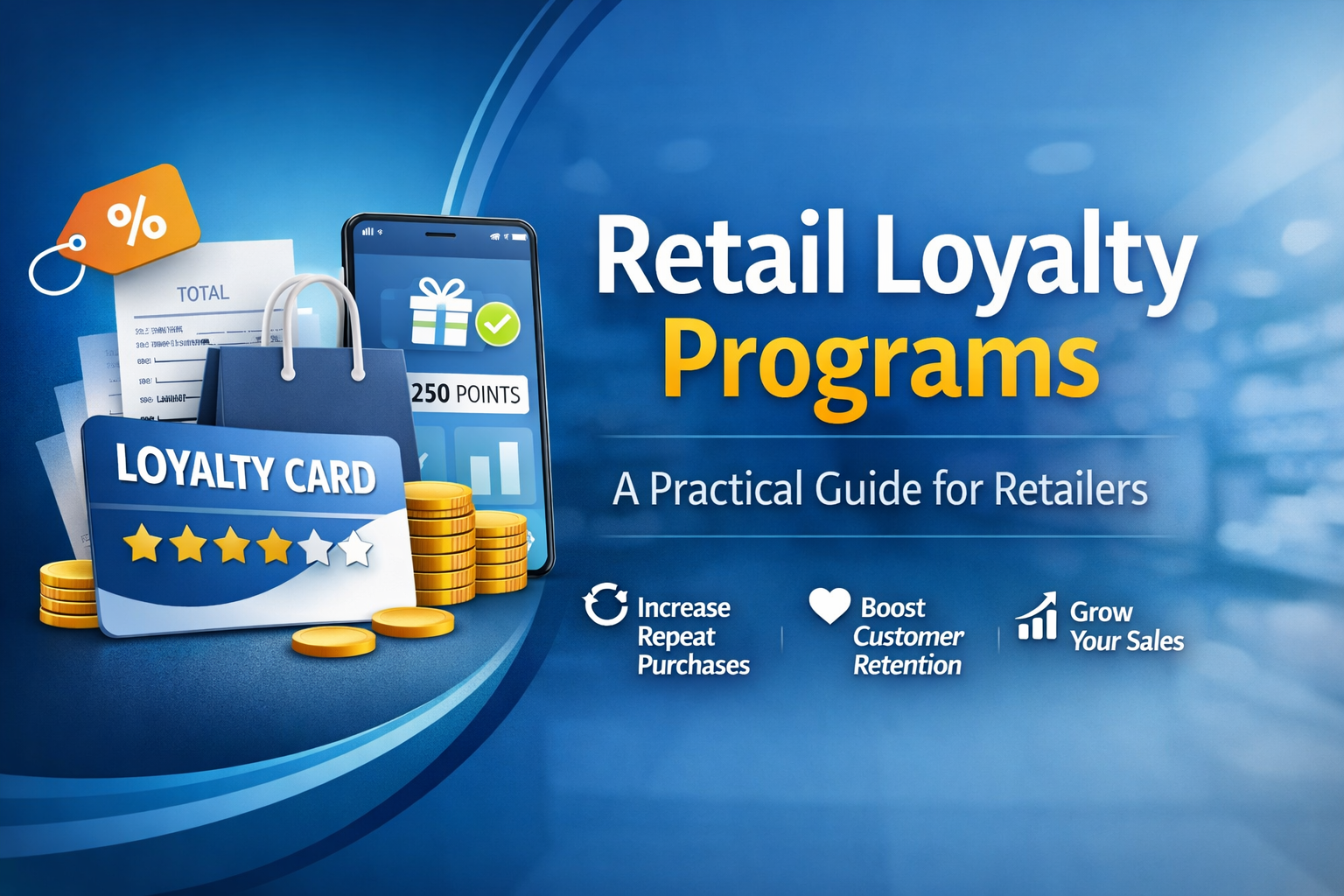
A retail loyalty program is a structured system that rewards customers for repeat purchases and other valuable actions, such as referrals, profile completion, birthday engagement, app usage, or promotional participation.
The goal is not just to reward transactions. A well-designed retail loyalty program helps retailers:
- increase repeat purchase frequency
- raise average order value
- improve customer retention
- encourage referrals and reviews
- collect cleaner customer data
- turn marketing into something measurable
In other words, loyalty should support both the customer experience and the business outcome.
Why retail loyalty programs matter more than ever
Many retailers still rely too heavily on one-time promotions. The problem is that discounting alone can train customers to wait for the next deal instead of building true loyalty.
A better retail loyalty strategy gives customers a reason to stay connected to your brand between purchases. It helps you move from random promotions to intentional retention. That means rewarding profitable behavior, creating stronger customer habits, and using automation to bring shoppers back at the right time.
For specialty retail, boutiques, multi-location retail, and growth-stage brands, this can be the difference between unpredictable traffic and a more consistent repeat-customer base.
What the best retail loyalty programs have in common
1. They are easy to join
If enrollment feels complicated, sign-up rates suffer. Retailers tend to get better results when customers can join quickly at checkout, through mobile, or inside a connected digital experience.
Simple enrollment matters because the sooner a shopper joins, the sooner you can start tracking behavior, rewarding visits, and building follow-up campaigns.
2. They make rewards feel achievable
Customers should understand how to earn and what they are working toward. If rewards feel too far away, the program loses momentum. If the value is too shallow, the program feels forgettable.
A strong retail rewards program makes progress visible and redemption realistic. Customers should feel that the next reward is worth pursuing.
3. They fit how the store actually sells
Not every store should use the same model. A lower-ticket retailer may benefit from visit-based rewards or digital stamp structures. A higher-ticket retailer may be better served by points, tiers, or milestone-based incentives.
The program should match your average transaction pattern, customer cadence, and product mix.
4. They keep customers engaged between visits
Retail loyalty should not end at the register. The best programs stay active through birthday campaigns, win-back automations, promotions, referral follow-up, and targeted messaging that keeps the brand top of mind.
This is where loyalty starts turning into a customer retention engine instead of just a points ledger.
5. They give retailers measurable insight
Retailers need more than enrollment counts. They need to know whether the program is driving repeat visits, higher spend, more redemptions, stronger retention, and better campaign response.
When the reporting is useful, retailers can stop guessing and start improving the program based on actual behavior.
Which type of retail loyalty program is right for your business?
There is no one best model for every retailer. The right structure depends on your brand, price point, purchase frequency, and growth goals.
Points-based loyalty programs
Points are one of the most common loyalty models in retail. Customers earn based on purchases and redeem for rewards later.
This model works well when:
- customers purchase often enough to build momentum
- you want flexible reward options
- you want to connect purchases, offers, and promotions in one program
Digital stamp or visit-based programs
Digital stamp programs are ideal when simplicity matters. Instead of asking customers to track abstract point balances, you reward them based on visits or clear completion milestones.
This can work especially well for specialty retailers, boutique concepts, and stores that want a straightforward path to redemption.
Tiered loyalty programs
Tiered programs reward customers not just for joining, but for growing their relationship with your brand. As customers spend or engage more, they unlock better perks or status.
This model is useful when:
- you want to recognize top customers
- you want to increase annual spend
- you want a stronger VIP-style experience
Cashback, gift card, or stored-value style rewards
Some retailers prefer loyalty structures tied to cashback, digital rewards, or gift card-style value. These can be especially effective when you want customers to return and redeem value on a future visit.
They can also support a stronger bounce-back effect than immediate discounting.
How to launch a retail loyalty program that actually works
Step 1: Start with one main business goal
Before choosing rewards, define the core objective. Are you trying to:
- increase repeat visits?
- improve average spend?
- reactivate dormant shoppers?
- grow member enrollment?
- standardize loyalty across multiple locations?
A loyalty program works best when it is tied to a clear business outcome.
Step 2: Choose an earning structure your customers will understand
Customers should quickly grasp how to participate. Keep the earning structure simple enough to explain at checkout and attractive enough to feel worth joining.
You can start with one core method and expand later. Many retailers begin with points or digital stamps, then add bonus campaigns, tiers, referrals, or promotional boosters as the program matures.
Step 3: Make checkout and enrollment easy
The easier it is for staff and customers to participate, the better the adoption. Retailers should look for a loyalty setup that fits their checkout workflow instead of forcing a disruptive change to daily operations.
That is especially important for growing retailers that want to improve retention without replacing the systems they already use.
Step 4: Build follow-up beyond the transaction
This is where many retail programs underperform. If your loyalty strategy only activates when a customer makes a purchase, you miss the opportunity to bring them back sooner.
Smart retail loyalty programs use automated follow-up for moments like:
- birthdays
- inactivity windows
- promotional periods
- referrals
- reviews
- milestone achievements
These touchpoints help you stay relevant without relying on constant manual outreach.
Step 5: Promote the program everywhere customers interact with you
Even a great program will underperform if people do not know it exists. Retailers should promote loyalty:
- in-store
- at checkout
- in email
- in SMS
- on landing pages
- in welcome messaging
- on social channels
- during seasonal campaigns
The goal is to make loyalty feel like part of the brand experience not a hidden add-on.
Step 6: Measure, refine, and expand
Once the program is live, track what matters. Watch enrollments, repeat visits, redemption activity, campaign engagement, and spend patterns. Then refine the rules, rewards, and messaging based on what customers actually respond to.
The best loyalty programs improve over time because they are managed as retention systems, not set-and-forget promotions.
What retailers should look for in loyalty program software
Retailers evaluating loyalty program software should look beyond basic points tracking.
A stronger platform should help you:
- support points, visit-based rewards, or tiered loyalty
- run birthday, win-back, referral, and promotional automations
- use email and SMS from the same retention workflow
- manage gift cards or digital rewards
- grow from one store to multiple locations
- track performance with meaningful reporting
- support custom workflows when needed
For some retailers, API flexibility also matters. That can be important when loyalty needs to connect with a custom commerce flow, mobile app, kiosk, or branded checkout experience.
Why Preferred Patron is a strong fit for retailers
Preferred Patron is built for retailers that want loyalty to improve retention, not just hand out generic discounts.
For retail businesses, that matters because the goal is not simply to launch a rewards program. The goal is to create a system that helps increase repeat purchases, build stronger customer relationships, and keep marketing tied to measurable results.
Preferred Patron supports retail loyalty with flexible options such as point-based rewards, digital stamps, tiered upgrades, gift cards, digital rewards, customer import tools, and multi-location expansion. It also supports automated email and SMS follow-up for birthdays, win-back campaigns, referrals, promotions, and review-related engagement.
For brands with more advanced needs, Preferred Patron also offers custom API support and geo-fencing for check-in models. Those strengths make it a practical fit for specialty retailers, boutiques, growth-stage multi-location brands, and retailers that want a cleaner path from simple rewards to more advanced retention.
If your retail business wants a loyalty program that fits your checkout workflow, supports long-term retention, and gives you more visibility into customer behavior, Preferred Patron’s retail loyalty platform is worth a closer look.
Final thoughts
Retail loyalty programs work best when they are simple for customers, practical for staff, and aligned with how your store actually grows.
The most effective programs do more than reward purchases. They help retailers bring shoppers back, improve retention, create stronger customer value, and market more intelligently between visits.
If you are building or upgrading a retail loyalty strategy, focus on clarity, ease of use, automation, and measurable outcomes. Those are the ingredients that turn a loyalty program into a real growth asset.
Ready to explore a retail loyalty program built for repeat purchases and stronger retention?
Visit our retail loyalty page, review loyalty program features, or compare plans on our pricing page.
Retail loyalty program FAQ
What are retail loyalty programs?
Retail loyalty programs are systems that reward customers for repeat purchases and other valuable actions, such as referrals, reviews, birthdays, or ongoing engagement with a store.
What is the best loyalty program for a retailer?
The best loyalty program depends on the retailer’s sales model, average transaction size, customer frequency, and growth goals. Common structures include points, digital stamps, tiers, and cashback or gift card-style rewards.
Do retail loyalty programs increase repeat purchases?
A well-designed retail loyalty program can help increase repeat purchases by giving customers a clear reason to return, engage, and redeem value over time.
Should retailers use points or digital stamps?
Points often work well for flexible retail reward structures, while digital stamps can be more effective for stores that want a simpler, easier-to-understand experience.
What should retailers look for in loyalty software?
Retailers should look for loyalty software that supports flexible reward structures, easy enrollment, email and SMS automation, reporting, gift cards or digital rewards, and room to grow into multi-location or custom workflows.